
The short answer: sedation dentistry is a group of options designed to help you feel calmer and more comfortable during dental care. At our Norlane practice the options range from local anaesthetic and laughing gas to IV sedation and general anaesthesia, and the right choice depends on your health, how anxious you feel and the treatment planned. It is always confirmed after a clinical assessment.
- What it is: a range of options that may help you feel relaxed, from a mild inhaled gas to deeper sedation.
- Who it may help: people who feel anxious about dental visits, have had difficult experiences before, or need longer or more involved treatment.
- What to weigh up: the benefits, the risks, the alternatives and the costs, all explained before you decide.
- First step: a conversation about how you feel, with no pressure to commit to anything.
What is sedation dentistry?
Sedation dentistry means using medication or an inhaled gas to help you feel more relaxed during dental treatment. It is different from local anaesthetic, which numbs the area being treated. Some people use local anaesthetic on its own, while others combine it with an option that also helps them feel calm. You can read more about the options we offer on our sedation dentistry page.
Who may benefit from sedation?
Feeling nervous about the dentist is very common. Sedation may be worth discussing if you:
- feel anxious or fearful about dental visits, or have put off care because of it
- have had a difficult dental experience in the past
- find it hard to stay still or keep your mouth open for long
- have a strong gag reflex or sensitive teeth
- need a longer or more complex procedure
- are caring for a child who finds dental visits overwhelming
Sedation is not right for everyone. Some medical conditions and medications affect which options are suitable, which is why we ask about your health first.
Your sedation options
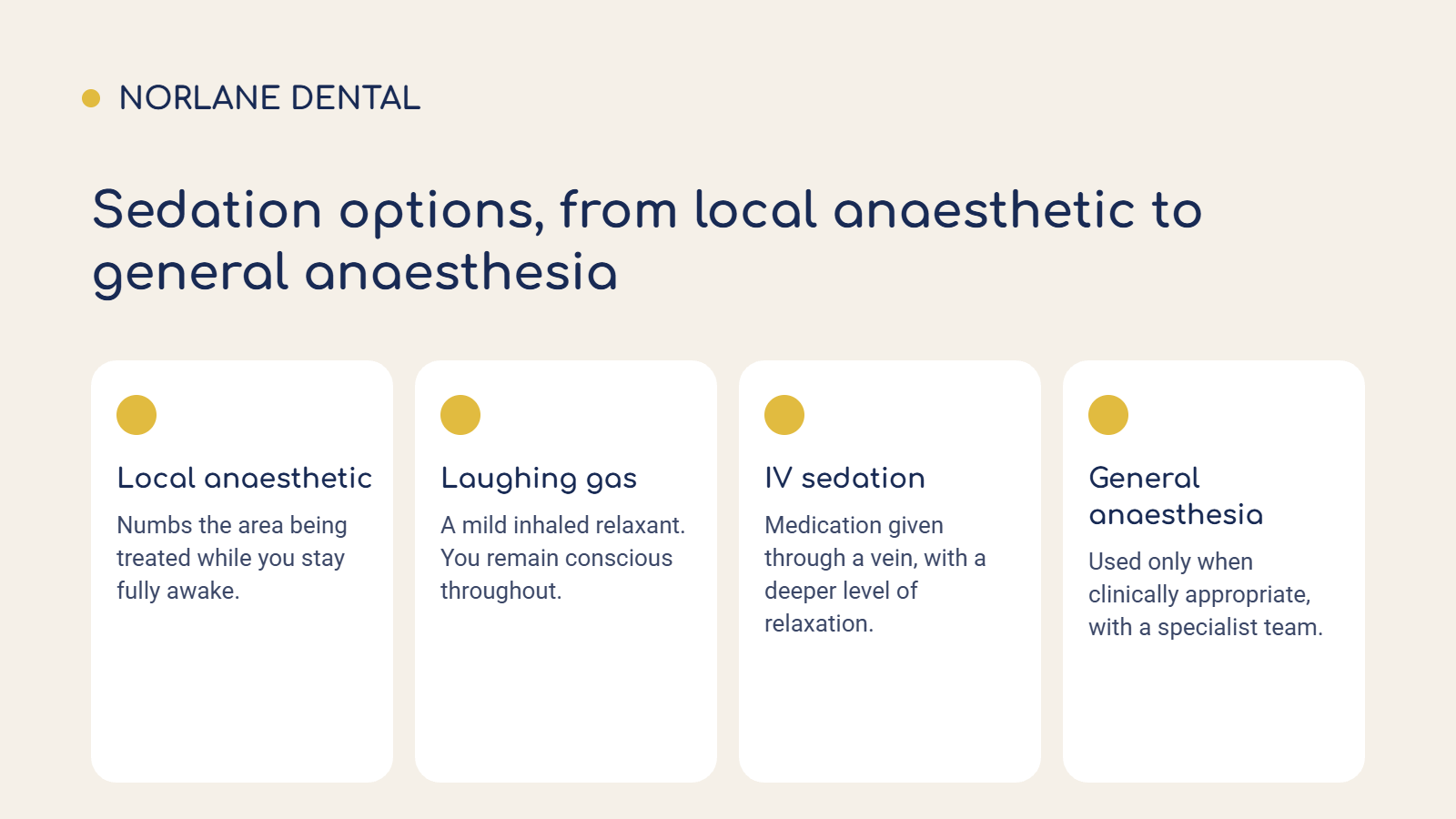
Local anaesthetic
Local anaesthetic numbs the area around the tooth being treated. You stay fully awake and aware, and many routine treatments are completed this way. Healthdirect has a plain-language guide to local anaesthetic.
Laughing gas (nitrous oxide)
Laughing gas is a mild sedative gas mixed with oxygen and breathed in through a small nosepiece. It is designed to help you feel more at ease, and you remain conscious throughout. It is not a general anaesthetic. Our laughing gas page explains more.
IV sedation
With IV sedation, medication is given through a vein to help you feel deeply relaxed. You may be drowsy and remember little of the appointment. It is usually arranged with an anaesthetist, and your regular dentist supports your care. See our sleep dentistry page for how this pathway works.
General anaesthesia
General anaesthesia means you are unconscious for the procedure. It is reserved for situations where it is clinically appropriate, such as extensive treatment or when other options are not suitable, and it is delivered by a specialist anaesthetic team at a partner facility.
What happens at your first consultation?
- A conversation. We ask what worries you, what has happened before and what you would like to feel more comfortable.
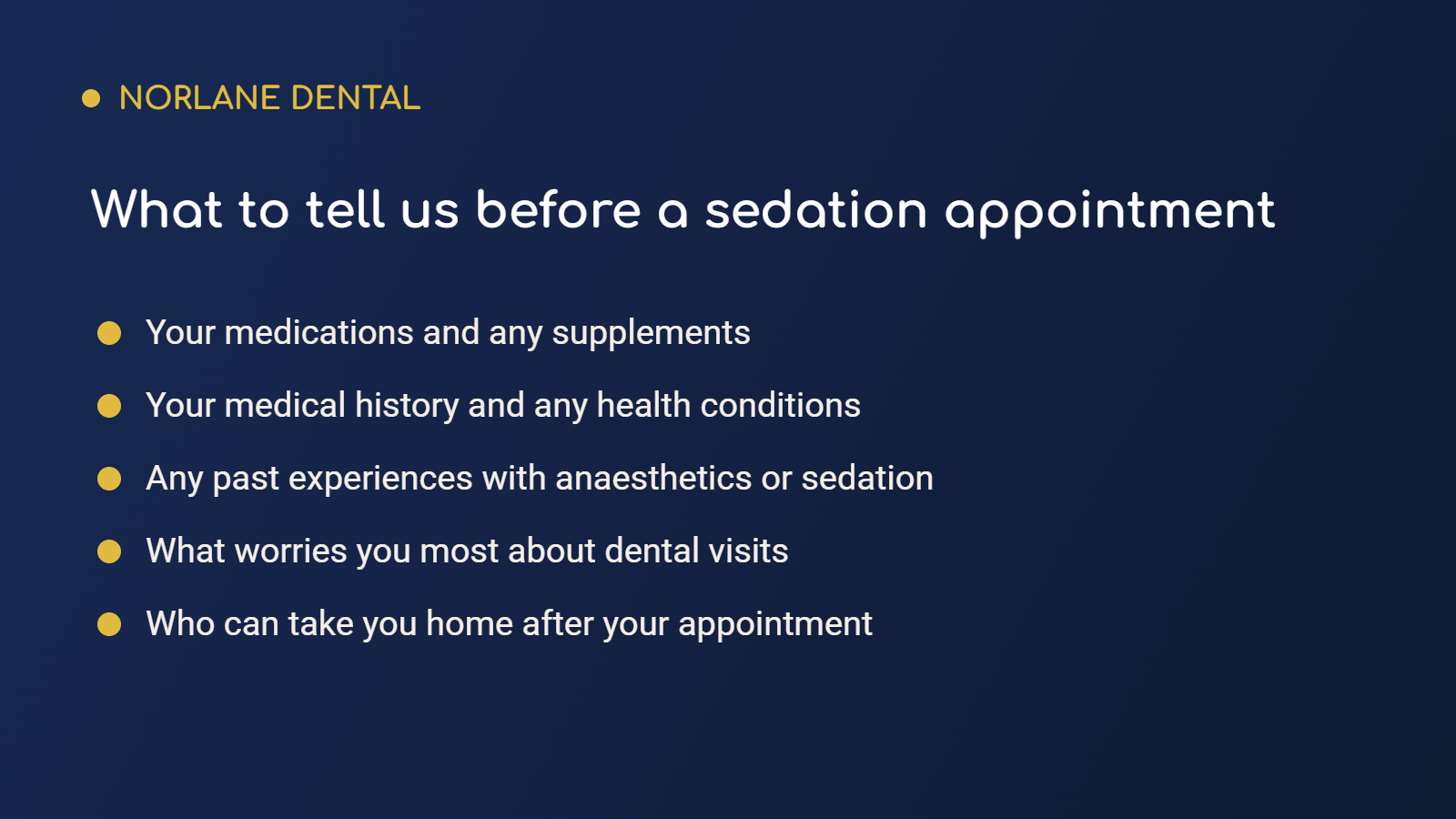
- Your health history. We review your medical history and medications. You can complete our medical history form beforehand.
- An examination. We assess your teeth and gums and explain what treatment you may need.
- Your options. We discuss which sedation options may suit you, along with the benefits, risks and alternatives.
- A written plan. You receive a treatment plan and an itemised estimate so you can decide in your own time.
If you have not had a check-up in a while, Healthdirect explains what to expect at a dental check-up.
How a sedation appointment may unfold
The details depend on the option you choose. In general:
- Before: you receive written instructions, which may include guidance on eating and drinking and on medications. Follow them closely.
- On the day: your team checks how you are feeling, confirms your health details and explains each step before it begins.
- During: you are monitored throughout, and the treatment is carried out while you are comfortable.
- Afterwards: you rest while the effects settle and receive aftercare instructions before you leave.
Risks and things to consider
All sedation and anaesthesia carries risk, and the risks differ between options. Some people feel nauseous, light headed or have a headache after laughing gas. IV sedation may cause drowsiness, bruising where the needle is placed and gaps in memory of the visit. General anaesthesia involves more preparation and monitoring and carries its own risks, which your anaesthetist will explain. Your dentist will go through the risks that apply to you before you decide. This is general information only, not a substitute for individual advice.
Alternatives to sedation
- treatment with local anaesthetic only
- shorter appointments, scheduled at a time of day that suits you
- agreeing on a signal so you can pause at any time
- having each step explained before it happens
- music or other distractions during treatment
- a gradual approach, starting with a simple visit to get comfortable
Aftercare
Follow the instructions you are given. After IV sedation or general anaesthesia you will need a responsible adult with you, and you should rest and avoid driving, operating machinery or making important decisions until your dentist says it is safe. After laughing gas many people feel back to normal fairly soon, but your dentist will advise you. Contact us if you feel unwell or have questions after your visit. In an urgent situation, see our dental emergency page.
Costs
Costs depend on the sedation option and the treatment. IV sedation and general anaesthesia may involve extra fees, such as an anaesthetist or facility, in addition to the dental treatment. We provide an itemised treatment plan so you know what to expect, and you can explore payment plans if you would like to spread the cost. Health fund rebates vary, so please check your cover.
Frequently asked questions
Is sedation dentistry safe?
Sedation and anaesthesia are widely used in dentistry, but all of them carry some risk. Your dentist reviews your medical history, your medications and the planned treatment before recommending an option, and your care is monitored throughout. Suitability is always confirmed after a clinical assessment.
Will I be asleep during my appointment?
It depends on the option. With local anaesthetic or laughing gas you stay awake. IV sedation is designed to help you feel deeply relaxed, and many people remember little of the visit. General anaesthesia means you are unconscious and is only used when it is clinically appropriate.
Can children have sedation or sleep dentistry?
Options are available for children as well as adults, and each child is assessed individually. A gentle first visit and a calm explanation of each step often help, and your dentist can talk through whether sedation may be suitable for your child.
Do I need someone to take me home?
For IV sedation and general anaesthesia you will need a responsible adult to take you home and stay with you, and your team will give you instructions before the day. For laughing gas your dentist will advise you at your appointment.
Will my health fund or Medicare cover sedation?
Cover varies between funds, policies and treatments, and we cannot confirm it for you. Ask us for an itemised treatment plan and check the details with your health fund before you decide.
Want to talk it through?
If you would like to discuss whether sedation may suit you, you can request an appointment online or call us on (03) 5278 2666. For more general dental information, the Australian Dental Association provides patient resources at teeth.org.au.
This article is general information only and is not a substitute for professional advice. Suitability for any treatment depends on an individual assessment, all treatment carries risks and benefits, and results and experiences vary between patients. A consultation is needed before options can be confirmed.
Written by the Norlane Dental team.
Dentistry Designed Around You.